
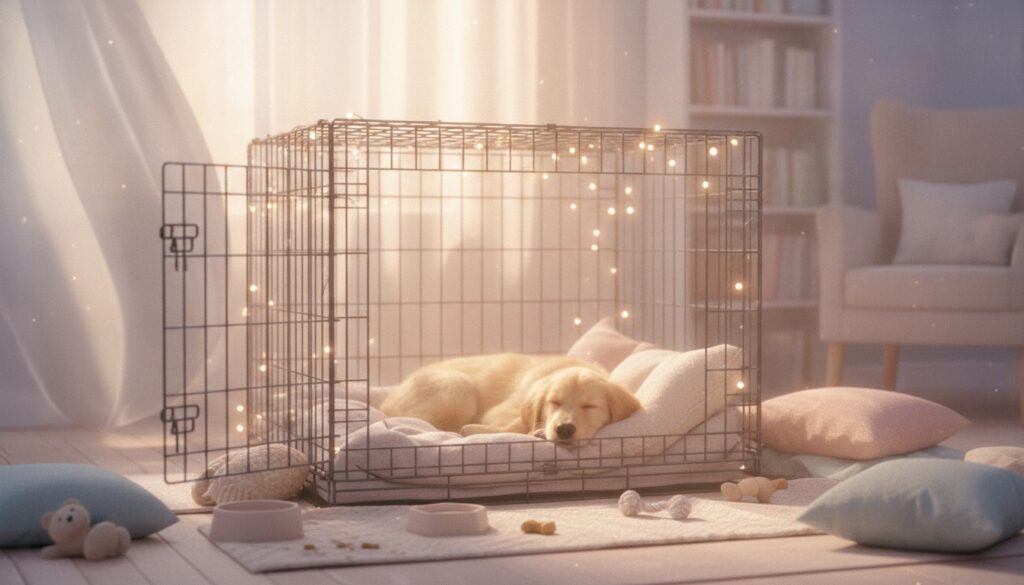
Dog crate training is a highly effective method for house-training, providing a safe den for your dog, and managing behaviour.
However, it’s crucial to approach it correctly to ensure a positive experience for both you and your canine companion.
Dog owners struggling with persistent dog crate training failure, jumping, barking, leash pulling, or furniture destruction typically turn to traditional obedience training, only to find their pets still misbehaving weeks later.
A growing body of research suggests the problem isn’t disobedience but boredom, with under-stimulated canine brains creating behavioural chaos.
That’s where Brain Training comes in
Size Matters: The crate should be large enough for your dog to stand up, turn around, and lie down comfortably. If you have a puppy who will grow, use a divider to adjust the space as they get bigger.
Type of Crate: Wire crates are often preferred for ventilation and visibility, while plastic crates and Furniture Crates can offer a more den-like feel. Choose what works best for your dog’s personality and your living situation.
Introduce Gradually: Never force your dog into the crate. Start by leaving the door open and letting them explore it on their own.
Positive Association: Toss treats, kibble, or their favorite toys into the crate. Encourage them to go in to retrieve them.
Comfort is Key: Place a soft, washable bed or blanket inside. Ensure the crate is in a quiet, low-traffic area of your home where your dog feels secure.
Feed Meals Inside: Make the crate a place where good things happen. Feed your dog their meals inside the crate with the door open initially.
Short Snaps: Begin dog crate training with very short periods of time (a few minutes) with the door closed while you are present.
Gradual Increase: Slowly increase the duration as your dog becomes more comfortable. Don’t rush this process.
Leave the Room: Once they are comfortable with you being home, gradually start leaving the room for short periods.
“Kennel,” “Crate,” “Go to Bed”: Choose a consistent command word and use it when you want your dog to go into the crate. Reward them when they go in on command.
Predictability: Dogs thrive on routine. Incorporate crate time into their daily schedule, especially for potty breaks and when you need to leave the house.
Potty Breaks: Take your dog out immediately after they come out of the crate for a potty break. Praise and reward them for successful pottying outdoors.
Dog crate training in the early stages needs your attention and care.
Watch for Signs of Distress: Pay attention to your dog’s body language. Are they panting excessively, whining, barking incessantly, or trying to escape?
Release if Stressed: If your dog shows significant signs of distress, don’t force them. Open the crate and allow them to come out. Revisit shorter durations or a different approach.
Naps and Downtime: ideal for when you’re busy, working from home, or need to step out for a short period.
Overnight Sleep (for some): Many dogs can sleep through the night in their crate, especially after they’re house-trained.
Accidents Happen: If an accident occurs, clean it thoroughly with an enzymatic cleaner to eliminate odours and prevent re-soiling.
Dog owners struggling with persistent dog crate training failure, jumping, barking, leash pulling, or furniture destruction typically turn to traditional obedience training, only to find their pets still misbehaving weeks later.
A growing body of research suggests the problem isn’t disobedience but boredom, with under-stimulated canine brains creating behavioural chaos.
That’s where Brain Training comes in
Negative Association: This is the most crucial “don’t.” If you use the crate to punish your dog for misbehavior, they will come to associate it with negativity and anxiety, defeating the purpose of positive crate training.
Physical and Mental Needs: Dogs are social animals and need exercise, mental stimulation, and interaction. Leaving them crated for excessive periods can lead to boredom, anxiety, and health problems.
Puppies: Puppies have small bladders and need frequent potty breaks. Their crate time should be much shorter than adult dogs. A general guideline for puppies is their age in months plus one hour, but always err on the side of caution.
Adult Dogs: A general guideline is that an adult dog can hold it for about 4-6 hours, but this varies. Consider your dog’s individual needs and always provide opportunities for them to relieve themselves.
Build Trust: Forcing them in will create fear and resistance. Let them enter on their own terms, lured by positive reinforcement.
Assess Behaviour: If your dog is a strong chewer or prone to destructive behaviour, ensure they are not left unsupervised in a crate until you are confident they can be trusted. This might require a stronger, more durable crate or additional management strategies.
Suffocating Space: Overcrowding the crate with toys, blankets, and food can make it uncomfortable and potentially dangerous. Ensure there’s enough room to move.
Patience is Key: Every dog learns at their own pace. Some will take to the crate quickly, while others may need more time and consistent effort. Be patient and celebrate small victories.
Seek Professional Help: If you’re struggling with crate training or your dog is experiencing severe anxiety, consult a certified professional dog trainer or a veterinary behaviourist. They can provide tailored advice and support.
Comfort and Security: The crate should be a place of comfort and security, not isolation. Ensure your dog still gets plenty of interaction and playtime outside the crate.
By following these guidelines and approaching crate training with patience, positivity, and consistency, you can help your dog develop a positive relationship with their crate and reap the many benefits it offers.